
Source: Oklahoma State University DASNR | June 19, 2020
The Oklahoma Department of Health has confirmed 20 cases of rabies for the year as June began – nearly equaling the 24 cases confirmed for 2019 – with two of the cases found in cattle.
“Vaccinating a large herd or flock of animals would not be cost effective, but animals that are in constant contact with humans such as a family milk cow, show animals, horses and pets should be vaccinated,” said Dr. Barry Whitworth, Oklahoma State University Extension veterinarian and food animal quality and health specialist. “Rabies is a fatal disease in animals and humans.”
An animal must come in contact with the saliva from a rabid animal in order to become infected. That typically occurs from a bite wound, but rabies can be transmitted when saliva comes in contact with a mucous membrane or open wound such as a cut in the skin.
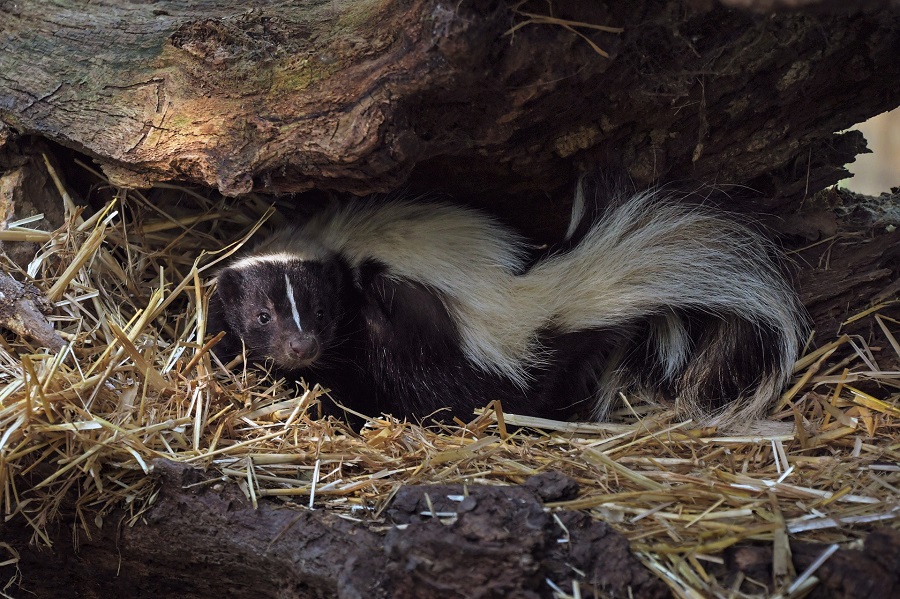
In Oklahoma, the most common reservoir of rabies is the skunk.
When most people think of rabies, a furious form of the disease comes to mind, Whitworth said. Animals suffering from that expression of rabies will be restless, wander, vocalize, drool and attack anything in sight. Infected animals that are normally nocturnal may be seen during the day. Convulsions in the late stages of the disease are common and those creatures usually die in four to eight days after showing clinical signs.
The second form of rabies is expressed as progressive paralysis. In those animals, the throat is paralyzed, and the animal cannot swallow or vocalize normally. Cattle might have a high-pitched bellow or be silent when they attempt to bellow. Rumination will cease, which may result in bloat. They also may appear to be straining to urinate or defecate and may have difficulty walking.
“It’s easy to mistake this form for a digestive or urinary problem, or possibly that a female animal is aborting,” Whitworth said. “Animals infected with the paralytic form of rabies usually die in two to six days from respiratory failure.”
More details about the disease are available online via an OSU Extension fact sheet and in a YouTube video featuring Whitworth that was produced as part of OSU Extension’s award-winning SUNUP television program.
When an animal has neurological signs, producers should avoid contact with the animal and contact their local veterinarian. A veterinarian who suspects rabies will not treat the animal since the condition is fatal and the danger to humans is not worth the risk of treatment. To confirm the diagnosis, a veterinarian will submit the brain for testing.
It is estimated that 50,000 to 60,000 people worldwide die each year of the disease. The people that die of rabies in the United States are often unaware they have been exposed to the virus, said Dr. Rosslyn Biggs, OSU Extension veterinarian and director of continuing education for the university’s College of Veterinary Medicine.
“Rabies can be prevented by vaccination and by preventing unnecessary exposure of domestic animals to wildlife,” she said. “Preventing contact with wildlife is difficult but paying close attention to sanitation on one’s property can discourage wildlife from entering areas where domestic animals are kept.”