
• Skip to primary navigation
  • Skip to main content
Texas and Southwestern Cattle Raisers Association

Texas and Southwestern Cattle Raisers Association

To Honor and Protect the Ranching Way of Life

  • Home
  • Who We Are
    • Why Join
    • Leadership
    • Staff
    • Business Membership
    • FAQs
    • Newsroom
    • Sponsorships & Advertisement
    • Employment
  • What We Do
    • Theft and Law
    • Issues & Policy
    • Education
    • Students and Young Professionals
    • The Cattleman Magazine
    • Disaster Relief Fund
    • Cattle Raisers Insurance
    • Cattle Raisers Trading Co
  • Events
    • Cattle Raisers Convention
    • Policy Conference
    • Ranch Gatherings
    • Summer Meeting
    • Ranching 101
  • Join
  • Member Center
  • TSCRA Store
  • Show Search
Hide Search

ForageFax Weed of the Week: Broomsedge bluestem

Broomsedge Bluestem (Andropogon virginicus L.) is a warm season perennial grass found throughout Central and East Texas. Broomsedge growth begins as temperatures consistently stay above 60 degrees F. It produces many seeds that are distributed by wind. It is a poor competitor, has poor nutritive value for livestock and low palatability. Broomsedge can quickly become the dominant species in over-grazed, low pH (< 5.5), low fertility, eroded soils where desired vegetation will not thrive.
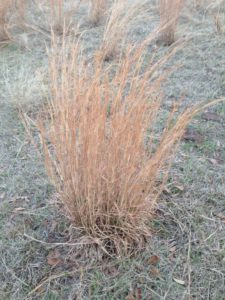
Broomsedge Bluestem

Since this plant thrives on low pH and low fertility soils, soil testing is the first step in managing a broomsedge infested field. Improved soil pH and fertility will shift the competitive edge toward the desirable forage species. This component will take various lengths of time depending on soil test levels. If your budget is limited, the priority should be adjusting the soil pH with lime.
If broomsedge is shading desirable species lower in the canopy, mowing may be necessary to bring in more light. However, neither mowing nor prescribed burning will reduce broomsedge populations. The application of glyphosate during active growth, either as a spot spray or rope wick, can be an effective herbicide option.
Vanessa Corriher-Olson, associate professor, forage Extension specialist
Soil & Crop Sciences, Texas A&M AgriLife Extension, Overton
[email protected]

Written by:
kristin
Published on:
October 14, 2019

Categories: Feed & Forage, Natural Resources, Plants, Ranching, The Cattleman Now, The Cattleman Now - App

Recent Posts

Crime watch: Six head of black Angus cow-calf pairs and donkey stolen in Callahan County

April 13, 2026

Texas & Southwestern Cattle Raisers Association Special Ranger Zach Havens, District 9 in …

Continue Reading about Crime watch: Six head of black Angus cow-calf pairs and donkey stolen in Callahan County

Jacksboro man arrested for theft of livestock in Young and Archer counties

April 13, 2026

Texas & Southwestern Cattle Raisers Association Special Rangers investigation leads to the …

Continue Reading about Jacksboro man arrested for theft of livestock in Young and Archer counties

Peyton Schumann named executive director of government relations at TSCRA

April 10, 2026

FORT WORTH, Texas (April 10, 2026) — Texas & Southwestern Cattle Raisers …

Continue Reading about Peyton Schumann named executive director of government relations at TSCRA

Footer

Texas and Southwestern Cattle Raisers Association
  • Email
  • Facebook
  • Instagram
  • Twitter
  • YouTube

PO BOX 101988
FORT WORTH, TX 76185

1-800-242-7820

© 2023 Texas & Southwestern Cattle Raisers Association; All Rights Reserved.

COPYRIGHT | PRIVACY POLICY | TERMS OF USE