
Source: OSU DASNR | Nov. 10, 2020
Alternating weeks of warm and cold weather are typical this time of year in the Southern Plains, but the recent cold snap across much of Oklahoma still seemed significant.
In some ways, that proved to be true: Freezing rain that hit Oklahoma at the end of October caused widespread power outages still being addressed in certain communities and regions. However, it failed to negatively affect the state wheat crop in anything more than cosmetically, said Amanda de Oliveira Silva, Oklahoma State University Extension small grains specialist.
“Most of the wheat that was up had only recently emerged and yield should not really be negatively affected, from what we are seeing in wheat plots around the state” she said. “It’s not pretty but quality should be fine.”
Silva shared insights about Oklahoma wheat and the recent freezing rain on SUNUP, the university’s weekly agriculture television program, available for viewing online.
OSU Extension agricultural educators Rick Nelson of Garfield County and Zack Henderson of Custer County echoed Silva’s take on the situation.
“We can live with ugly wheat,” Nelson said. “Producers in our area of the state were mostly just elated to have some much-needed precipitation. The freezing rain was a hard way to get the moisture, but they were thankful for it.”
Lack of moisture has been a very real issue in western Oklahoma and Henderson has seen plenty of evidence in his county. The Oklahoma Mesonet shows Custer County and surrounding areas to be in D2 (severe) or D3 (extreme) levels of drought.
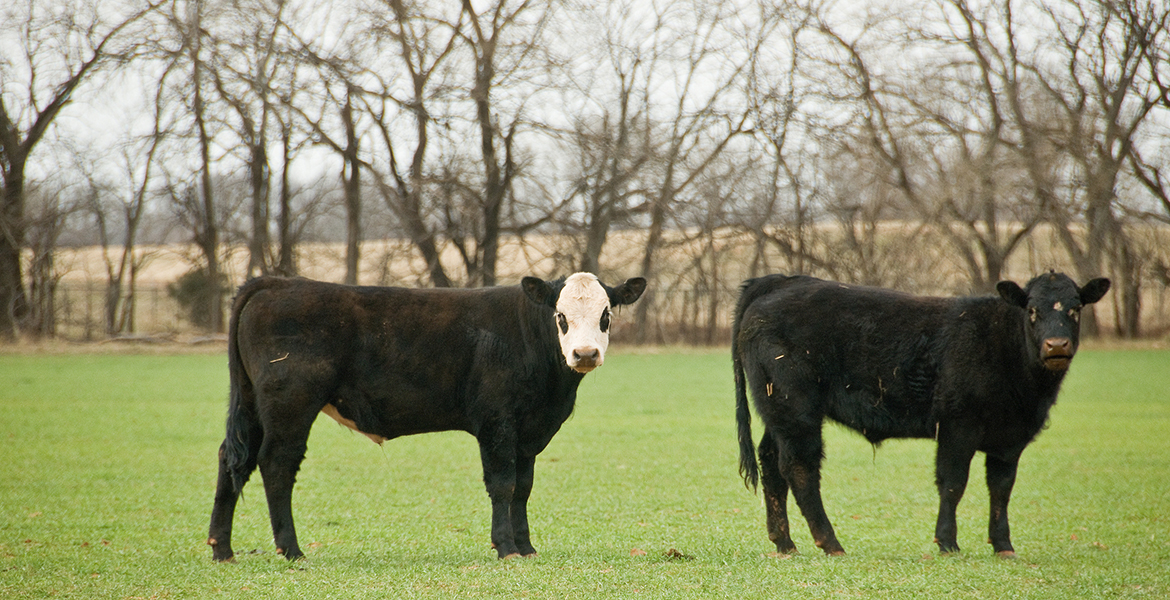
“Most dual-purpose wheat producers in Oklahoma should still be in decent shape to have a grazing resource be available going into early winter,” he said. “Cattle don’t care if the wheat is ugly as long as it is palatable, and that is the primary takeaway.”
Market conditions in early fall for grazing cattle 120 days and selling them in March suggested potential for winter grazing returns above production costs. Though the markets are always variable, that appears to be holding true as of early November.
“There are areas of southwestern and far western Oklahoma where some wheat producers have been waiting to get moisture before planting their wheat,” said Mike Schulte, Oklahoma Wheat Commission executive director. “People I’ve been speaking with have shared that it is still too wet to get into their fields as of Nov. 3, so we’ll be keeping an eye on that. Also, planting late in the year can affect operational decisions relative to growing wheat and using it as a grazing resource.”
OSU Extension fact sheets detailing key management considerations relative to growing wheat as a grain-only or dual-purpose enterprise are available online and through all OSU Extension county offices.