
• Skip to primary navigation
  • Skip to main content
Texas and Southwestern Cattle Raisers Association

Texas and Southwestern Cattle Raisers Association

To Honor and Protect the Ranching Way of Life

  • Home
  • Who We Are
    • Why Join
    • Leadership
    • Staff
    • Business Membership
    • FAQs
    • Newsroom
    • Sponsorships & Advertisement
    • Employment
  • What We Do
    • Theft and Law
    • Issues & Policy
    • Education
    • Students and Young Professionals
    • The Cattleman Magazine
    • Disaster Relief Fund
    • Cattle Raisers Insurance
    • Cattle Raisers Trading Co
  • Events
    • Cattle Raisers Convention
    • Policy Conference
    • Ranch Gatherings
    • Summer Meeting
    • Ranching 101
  • Join
  • Member Center
  • TSCRA Store
  • Show Search
Hide Search

Prepare now for mosquitos

Source: AgriLife Today | April 28, 2019
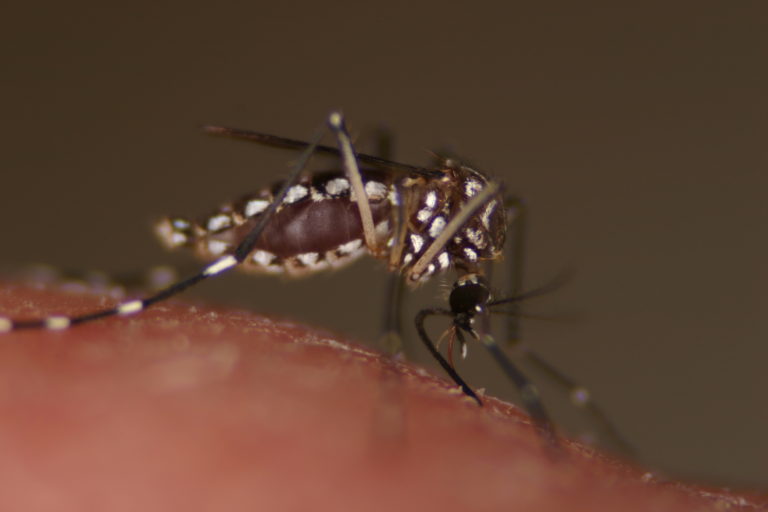
Aedes aegypti mosquito
Aedes aegypti mosquito

Homeowners beware, mosquitos are on the move.

Dr. Mike Merchant, Texas A&M AgriLife Extension Service entomologist, Dallas, said temperatures are now warm enough to begin seeing early season mosquitoes.

Merchant said recent rains created plenty of opportunities for mosquitoes to propagate, and homeowners should take preemptive measures to reduce populations within their neighborhoods.

“Now is a good time to dump out bird baths, unused fountains and other containers holding water in anticipation of later spring mosquitoes,” Merchant said. “Early mosquitoes don’t usually bring human diseases, but the bites itch just as much.”

Early mosquitoes may travel 10 miles or more in search of hosts, he said. These floodwater mosquitoes breed in puddles that form after spring rains.

Merchant said it’s difficult to predict the severity of mosquito hatches and possible threats from the airborne pest spreading diseases such as West Nile virus and Chikungunya. But the mild winter and recent spring rains are two factors that can lead to an earlier and more severe disease season beginning in June.  

“The worst situation is when we have a wet spring followed by a dry, hot summer,” he said. “Dry conditions sound counter intuitive, but that’s what disease-carrying mosquitoes like best. When the rains go away, creeks and water in containers become stagnant and bacteria-laden—just the kind of water they like. Breeding sites for West Nile virus-carrying mosquitoes include bird baths, buckets, clogged gutters, tire swings, wheelbarrows or anything that holds rain or irrigation water.”

To learn more about mosquitoes and for a comprehensive look at preemptive control measures, visit https://mosquitosafari.tamu.edu/.

“The website covers everything from preventative control of breeding sites to repellents and what we know about the diseases mosquitoes carry,” he said.

Written by:
kristin
Published on:
April 30, 2019

Categories: Natural Resources, Pests, The Cattleman Now, The Cattleman Now - App

Recent Posts

Peyton Schumann named executive director of government relations at TSCRA

April 10, 2026

FORT WORTH, Texas (April 10, 2026) — Texas & Southwestern Cattle Raisers …

Continue Reading about Peyton Schumann named executive director of government relations at TSCRA

Crime watch: Black Beefmaster bull missing in Angelina County

April 10, 2026

Texas & Southwestern Cattle Raisers Association Special Ranger Darrel Bobbitt, District 14 in …

Continue Reading about Crime watch: Black Beefmaster bull missing in Angelina County

Crime watch: Longhorn bull missing in Robertson County

April 8, 2026

Texas & Southwestern Cattle Raisers Association Special Ranger Brent Mast, District 22 in East …

Continue Reading about Crime watch: Longhorn bull missing in Robertson County

Footer

Texas and Southwestern Cattle Raisers Association
  • Email
  • Facebook
  • Instagram
  • Twitter
  • YouTube

PO BOX 101988
FORT WORTH, TX 76185

1-800-242-7820

© 2023 Texas & Southwestern Cattle Raisers Association; All Rights Reserved.

COPYRIGHT | PRIVACY POLICY | TERMS OF USE