

Texas courts clarify legal landscape for livestock owners.
Story by Jena McRell

Traveling on the highway in the dark of night, a driver rubs his eyes as a shadowy figure steps abruptly into view. A large bull stands square in the middle of the road, straddling the center line. With no time to do anything except slam the brakes and pray, the driver lurches the vehicle to a stop just yards before the 1,800-pound animal.
Looking into the headlights, both the bull and driver freeze — and time does, too.
Slowly, the animal crosses the road and enters the ditch. The driver exhales for the first time in what feels like ages, fully realizing how the entire situation could have ended much differently.
With more travelers on rural roadways each year, attorney Jim Bradbury says the risk to livestock and landowners is on the rise, too.
“As we are urbanizing, we have a lot more people traveling and driving at high rates of speed,” he says. “There’s more traffic than there used to be, and it increases the potential for some type of accident. So, you have to protect yourself.”
A highway collision, no matter the cause, is a nightmare event for any individual or family — and for cases involving livestock, the animal’s owner, as well. Those involved question how such a tragedy could happen and who is at fault.
Within the last five years, the Texas Supreme Court and two appellate cases have clarified liability standards when cattle or other livestock are loose on the highway. Bradbury says the decisions bode well for cattle raisers and landowners.
“A lot of coffee shop talk out there is that, if you have an animal out and somebody hits it, then you are liable,” Bradbury says. “That is not the law. It’s never been the law, and the courts have made that very clear.”
Closed vs. open range
The first consideration in a livestock collision case is whether the accident occurred in a closed range county. Like many states in the West, Texas is considered open range, unless an exception applies. This dates back to the early days of cattle drives and pioneer towns, when livestock roaming was legal and expected.
By the 1930s and ’40s, many counties and precincts throughout the state voted to move from open range to closed range status, legally requiring livestock owners to prevent animals from running at large. Any property on a state or U.S. highway must build a fence, regardless of whether the county is open or closed range.
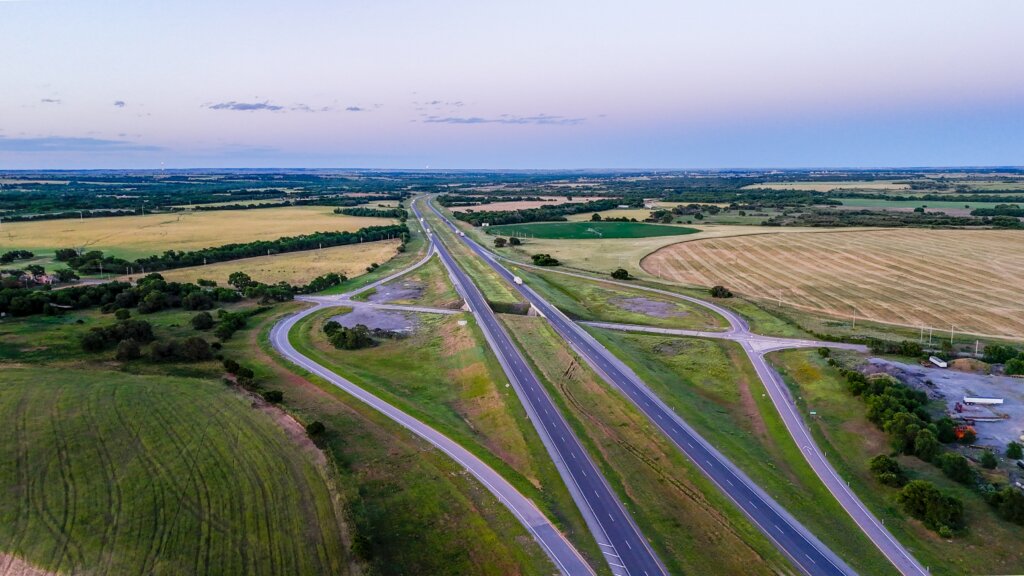
“Within those closed range areas, if you have livestock, you have an obligation to fence those animals in, whereas counties that remain open range don’t have that obligation,” says Bradbury, adding that it is important for landowners to understand the local stock laws impacting their property.
In the event of a roadway collision in an open range county, the land or livestock owner is not liable for any damages. In closed range counties, the liability standard depends on where the incident occurred.
“Then you get into more granular elements of legal analysis,” Bradbury says. “Did you permit the animal to be in the roadway? Or did you ‘knowingly’ permit the animal to be in the roadway?”
Accidents on U.S. or state highways fall under the “knowingly permit” standard, which involves knowledge of an issue and a conscious inaction. This goes beyond a one-time animal escape or act of Mother Nature. The plaintiff must prove that the livestock or property owner knew there were issues with the fences or cattle were previously reported out, and nothing was done to resolve the problem.
“In that instance, a court could determine that they knowingly permitted the animals to be in the roadway,” Bradbury says. “Obviously, no one truly permits it because no one wants an animal in the roadway, but those are the legal standards.”
In an opinion released this fall, the Eastland Court of Appeals clarified these liability standards based on previous case law and legal precedent. The case, Mullins v. McWhirter, called into question what it means to knowingly permit animals to roam at large.
“To find a producer responsible for an animal in the road is not impossible,” he explains, “but the courts have delved into fence law and livestock issues and made clear pronouncements for what we consider the standard.”
A deadly collision
On July 19, 2020, Rowdy Escobar was traveling by motorcycle on U.S. Highway 84 in Coleman County, on his way home after helping respond to area wildfires. Late in the night, he topped a hill and struck a black cow owned by Charlotte Mullins. Escobar suffered fatal injuries, and his family filed a suit against Mullins.
According to court documents, Mullins leased land west of U.S. Highway 84 and had 47 cows on the property. She was at her residence 200 miles away at the time of the accident. Notably, the lease terms indicated that Mullins was responsible for maintaining fences on the land. She testified that she had been to the property a week before the accident and believed the fences were suitable for containing cattle.
“The question for the court was, did this livestock owner knowingly permit that animal to be in the roadway?” Bradbury explains.
The trial jury said yes, and the Escobar family was awarded $260,000 in damages.
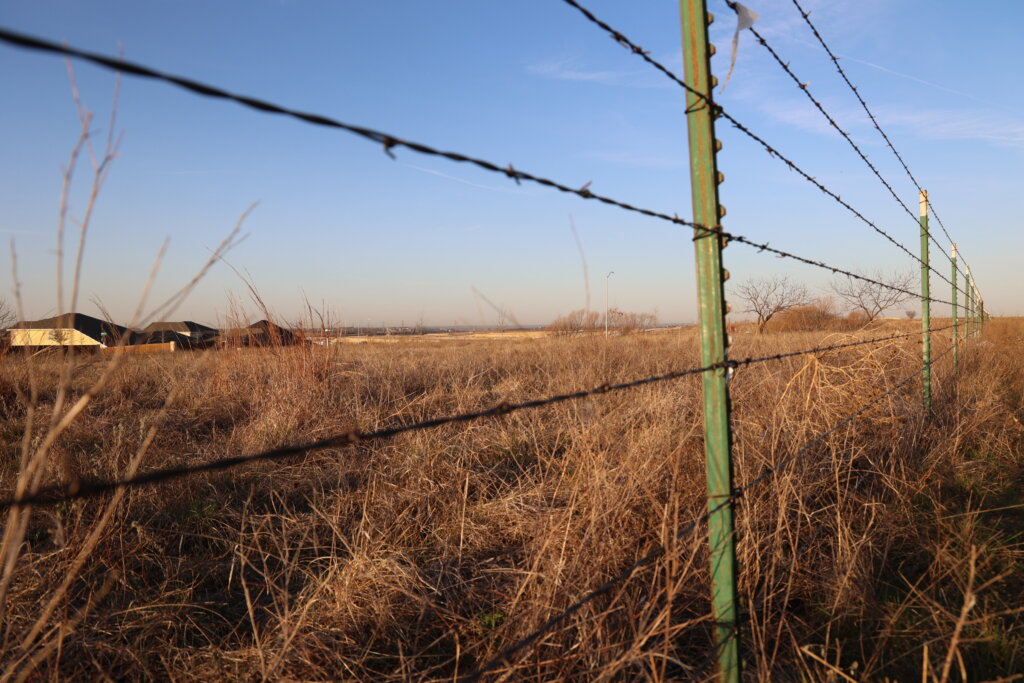
Central to the plaintiff’s case was testimony from a hired expert who inspected the fences 10 months following the accident. He testified that he found brush and trees growing in the fenceline, and places where the fence was less than the industry-standard 48 inches. He also said it was inevitable that cattle would get out on the highway because of the inadequate fencing.
Further testimony revealed that since Mullins took over the operation in 2017, there had been no reports of cattle getting out. Only a few instances were on record years prior.
On appeal, the Eastland court analyzed the Texas Supreme Court opinion in Pruski v. Garcia and a First Court of Appeals’ decision in Arraby Properties LLC v. Brown. Both cased involved serious accidents where land or livestock owner liability was questioned.
In Pruski, the high court held that to “knowingly permit” must involve awareness and assent, rather than negligence or accidental escape. Arraby applied the same principle and clarified that state law does not require owners to prevent all escapes and knowing an animal might escape is insufficient to establish liability.
Following this case law, the Eastland Court of Appeals reversed judgment in the Mullins case and said it did not find that the evidence supported liability against the livestock owner.
“It is a really good opinion,” Bradbury says. “This is now the third court decision we’ve had in recent times that indicates that this a tough standard. It is a high bar to meet.”
Proactive steps
While the appellate court’s decision in Mullins is considered a win for livestock producers, Bradbury says the industry should remain diligent when it comes to maintaining fences, checking animals regularly and communicating with neighbors. He reminds cattle raisers that while the correct law was eventually applied, the trial jury that heard the case felt otherwise. The nuances of agricultural law can be challenging to convey to those outside the industry, Bradbury says.
“We have to be aware in the livestock industry that other people think about these things differently than we do,” he explains. “These are serious situations you should be worrying about.”
The attorney recommends landowners inspect fences at least every six months to document the condition, any needed repairs and whether animals have been out.
“If you’ve got a gap in the fence and cattle are getting out, or a water gap that is not working properly, you need to be really careful and vigilant about that,” Bradbury says.
He advises landowners who lease property to livestock tenants to identify the party responsible for maintaining fences within the written lease agreement.
“That virtually ensures the owner who’s not involved in the cattle operation is not going to be subjected to suit or liability,” he says.
Bradbury says it is also important for livestock owners and landowners to carry adequate insurance in the event of an accident involving cattle on a roadway.
Because no two cases are the same, he says practicing regular inspections and keeping consistent documentation can mitigate any potential risks.
“My advice is landowners need to be taking those precautions whether they’re located on a state highway or somewhere else,” Bradbury says. “That is going to be a very hard case for someone to win.”
—-
Big Three
Recent case law informs liability standards.
Pruski v. Garcia
- A case involving a bull that escaped, wandered onto a state highway and collided with a car.
- Court considered whether the Texas Agriculture Code Section 143.102 prohibition on livestock roaming at large on state highways conflicted with Wilson County stock law.
- Court of appeals applied stock law broadly when Section 143.102 was found not to apply and effectively created a strict liability standard.
- Landowner appealed to Texas Supreme Court.
- The high court sided with the bull owner in its opinion filed Jan. 31, 2020.
Arraby Properties LLC v. Brown
- Paul Brown hit a cow on State Highway 225 in Harris County. Arraby Properties was deeded the land by the Ybarrases, who lived on a six-acre farm and were responsible for maintaining fences.
- Brown sued for negligence and gross negligence for knowingly permitting the cow to run at large on a state highway.
- The trial court held that Arraby Properties was liable.
- The court of appeals reversed, citing that Arraby, which did not own the animal, had no duty to Brown.
- Appellate court also held that state statute does not impose duty to prevent all escapes of fenced animals in its opinion filed Oct. 10, 2023.
Mullins v. McWhirter
- Motorcycle collided with a black cow on a U.S. highway at night and motorcyclist was killed.
- Trial jury found owner of the cow liable.
- Court of appeals reversed, finding the evidence legally insufficient to prove that the cow’s owner knowingly permitted it to traverse or roam at large, unattended, on the highway right-of-way.
- The court also distinguished between the “should have known” negligence standard and “reasonable certainty” standard to determine whether the owner knowingly permitted the cow to run at large.
- Additionally, the appellate court emphasized liability is imposed against livestock owners who knowingly permit their livestock to roam at large as a “matter of course” in its opinion filed Oct. 30, 2025.
Source: Jim Bradbury, James D. Bradbury PLLC
What constitutes an adequate fence?
Under Texas state law, a fence must be at least 4 feet high and consist of one of the following:
Barbed wire: at least 3 strands on posts no more than 30 feet apart with stays between every 2 posts.
Picket fence: pickets no more than 6 inches apart.
Board fence: at least 3 boards no less than 5 inches wide and 1 inch thick.
Rail fence: at least 4 rails.
Source: Texas Agriculture Code 143.028s.
—-
###