
• Skip to primary navigation
  • Skip to main content
Texas and Southwestern Cattle Raisers Association

Texas and Southwestern Cattle Raisers Association

To Honor and Protect the Ranching Way of Life

  • Home
  • Who We Are
    • Why Join
    • Leadership
    • Staff
    • Partners
    • FAQs
    • Newsroom
    • Sponsorships & Advertisement
    • Employment
  • What We Do
    • Theft and Law
    • Issues & Policy
    • Education
    • Students and Young Professionals
    • The Cattleman Magazine
    • Disaster Relief Fund
    • Cattle Raisers Insurance
    • Cattle Raisers Trading Co
  • Events
    • Cattle Raisers Convention
    • Policy Conference
    • Summer Meeting
    • Ranch Gatherings
    • Ranching 101
  • Join
  • Member Center
  • TSCRA Store
  • Show Search
Hide Search

ForageFax: Feeding hay to reduce waste

Source: AgriLife

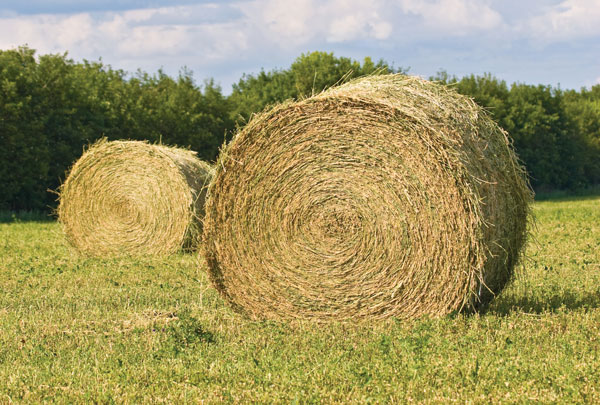
On many farms, hay feeding losses are as high as storage losses. Some hay losses during feeding can be expected with any feeding system, but the amount of loss varies with the system used. The major objective for any feeding system should be to keep loses to a practical minimum level, thus permitting animals to consume the majority of hay offered at feeding.
Feeding losses include trampling, leaf shatter, chemical and physical deterioration, fecal contamination, and refusal.
Feeding in only one area can cause excessive sod destruction, usually creates muddy conditions, often results in heavy spring weed pressure, and can result in soil compaction and/or ruts in the field. Frequently moving the feeding area allows manure to be spread more uniformly over the field and therefore improves soil fertility in bare or thin spots, while reducing the severity of sod damage.
Key concepts regarding hay feeding:

  1. Hay quality should be matched to animal needs.
  2. When animals are fed outside, a well-drained site should be selected to reduce feeding losses.
  3. Hay stored outside should be fed before hay stored inside; other things being equal, high value hay stored outside should be fed before low value hay stored outside.
  4. Putting a barrier between animals and hay will help reduce feeding losses. Hay racks/rings can be particularly effective.
  5. Forcing clean up of hay by animals which have low nutrient requirements before feeding more hay can help reduce hay waste.

Vanessa Corriher-Olson, Forage Extension Specialist

Soil & Crop Sciences, Overton

[email protected]

Texas A&M AgriLife Extension

Written by:
kristin
Published on:
October 28, 2019

Categories: Feed & Forage, Ranching, The Cattleman Now - App

Recent Posts

Crime watch: Cattle missing in Shelby County

March 13, 2026

Texas & Southwestern Cattle Raisers Association Special Ranger Darrel Bobbitt, District 14 in …

Continue Reading about Crime watch: Cattle missing in Shelby County

Applications now open for 2026 TSCRA high school leadership camps

March 11, 2026

FORT WORTH, Texas (March 11, 2026) — Texas & Southwestern Cattle Raisers Association today …

Continue Reading about Applications now open for 2026 TSCRA high school leadership camps

Crime watch: Five cattle missing from two properties in Throckmorton County

March 10, 2026

Texas & Southwestern Cattle Raisers Association Special Ranger Cliff Swofford, District 8 in …

Continue Reading about Crime watch: Five cattle missing from two properties in Throckmorton County

Footer

Texas and Southwestern Cattle Raisers Association
  • Email
  • Facebook
  • Instagram
  • Twitter
  • YouTube

PO BOX 101988
FORT WORTH, TX 76185

1-800-242-7820

© 2023 Texas & Southwestern Cattle Raisers Association; All Rights Reserved.

COPYRIGHT | PRIVACY POLICY | TERMS OF USE