
TSCRA members travel to South Korea with U.S. Meat Export Federation.
Story by Jena McRell
Photos courtesy of USMEF
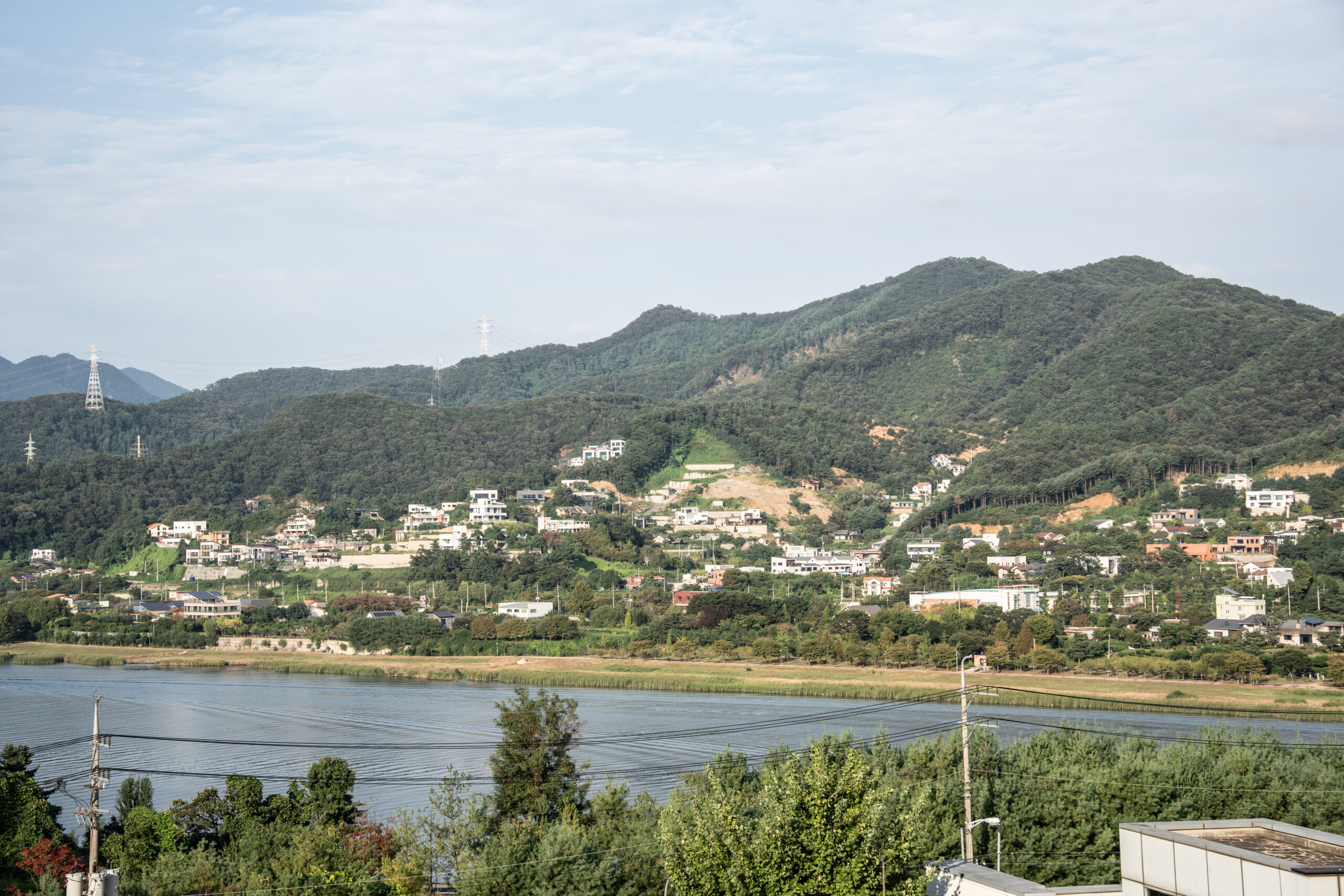
Looking out their window, James and Kara Dudley watched as a remarkable metropolis blurred past. The couple was riding a bullet train headed south from Seoul, South Korea, one of the world’s largest urban centers. High-rise buildings stacked one after another in every direction, seemingly growing right out of the mountains.
“You felt like you were in a completely different world,” Kara says. “It is 180-degrees different from what we live every day.”
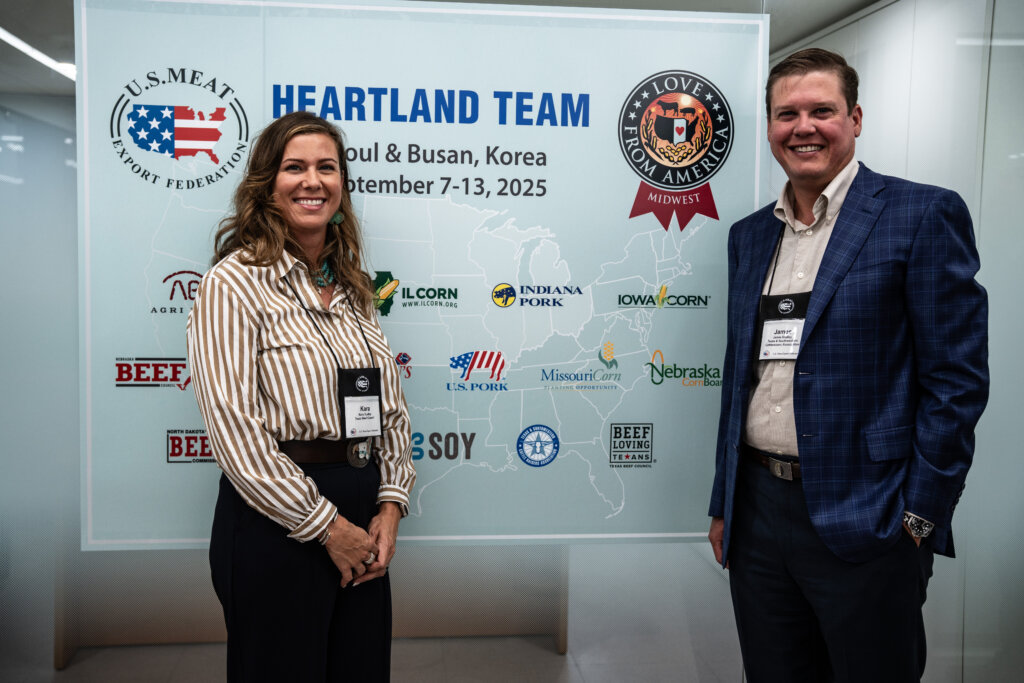
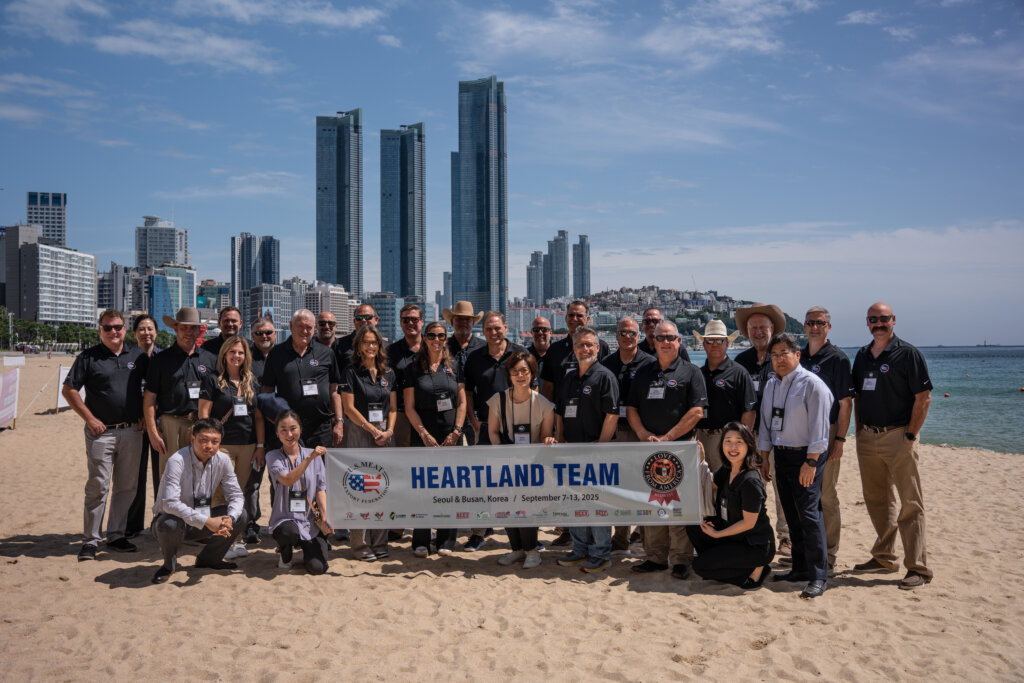
With multigenerational family ties to ranching in Texas Hill Country, the Dudleys are rooted in wide-open spaces, big skies and the solitude of nature. Last September, they joined about 20 fellow ranchers and farmers for an up-close experience of Korean culture and cuisine as part of U.S. Meat Export Federation’s Heartland Tour.
South Korea, geographically the size of Indiana, is home to more than 50 million people, half of whom live in Seoul, the capital city. Korea is also the top-valued export destination for U.S. beef, with 2024 exports reaching $2.2 billion.
“Korea is a very interesting market,” James says. “Their consumers have really adopted protein, especially beef protein. While they are buying a lot now, there’s an opportunity for them to purchase more going forward.”
The country’s growing interest in U.S. beef comes at a critical time in the global marketplace. At time of press, China remained closed to U.S. beef imports due to tariff and non-tariff barriers impacting U.S. beef plants and cold storage facilities.
If shipments cannot move into China, the region’s next-closest market is Korea. And, based on the Dudleys’ experience, the country is happy to pick up the slack.
“The consumer is very interested in our product, so that is a huge plus,” James says. “Everybody there is working to get more of our beef, because there’s not an issue on the demand side.”
Rising demand for U.S. beef in Korea can be attributed to the country’s shift toward a more protein-based diet. Traditionally, the Korean diet was 60% rice, followed by protein and vegetables. Consumer research has shown that percentage has now flipped to 60% protein and vegetables.
James and Kara say the train ride through the densely populated region, with very few acres of open space or farmland, demonstrated how critical trade partnerships are for the Korean food supply.
“With the U.S. being at the forefront offering a safe, high-quality beef product, it has been a great way for us to get further into the South Korean diet,” Kara says.
Technology reigns
To keep pace with demand, South Korea is a sophisticated display of innovation and design. Both James and Kara agree the use of automation, robotics and technology is what stood out to them most from the trip. The group toured key locations, from the Port of Busan and importer Highland Foods to retail and foodservice providers.
“The constant theme from what we noticed about South Korea is their automation and [how] their technology is so advanced and so much a part of how they get the frozen beef through the food chain,” Kara says. “It was incredible.”
Among their tour stops was the e-commerce company Coupang, which operates a large grocery distribution division. Hungry for a steak but short on time? Coupang online orders placed before midnight will arrive on the customer’s doorstep before sunrise.
“Some Koreans we spoke with told us, ‘We couldn’t survive without Coupang,’” Kara explains. “Not a lot of people have the time to grab their groceries, so you can dial it up on your phone and it will be there.”
Home meal replacement kits, which came onto the scene during the COVID-19 pandemic, are also extremely popular. James and Kara watched as they were assembled while touring Fresheasy, one of the country’s largest meal-kit providers. The company partners with retailers and restaurants to create ready-to-cook meals, many featuring premium proteins like U.S. beef.
The group also toured Highland Foods, which is often the first stop on beef’s journey from the U.S. to Korean plates. The company imports frozen beef and places it in cold storage until it is time to be processed. Then, the beef is carved and packaged for retail and foodservice locations and companies like Fresheasy.
James says he will never forget walking into the company’s fully automated, 165-foot-tall deep freeze cooler. They watched boxed beef as it was moved throughout the maze of products. “We went in on the mid-floor. That’s a long way down and still a long way up,” he remembers. “And it’s all constantly moving.”
After riding the bullet train from Seoul to the Port of Busan, about a 240-mile trip from the northern region to the south, the group experienced more innovation at work. The almost fully automated port is among the world’s largest. The precise operation connects overseas trade partners with local markets and other countries throughout the region.
A taste of home
A few flavors popular in Korean cuisine may come as a surprise. On their first night in the country, the group of ranchers and farmers enjoyed barbeque for dinner. The distinctly American — and uniquely Texan — cooking style is trending in South Korea thanks to a growing social media following.
Kara says the best hamburger she has ever tasted was from Frank Burger, a Korean fast-casual burger chain. The group toured the company’s production facility, where they grind U.S. beef into individual patties that they flash freeze, package and send out to restaurants.
“The burgers tasted unbelievable,” Kara says. “They were coming right out of the test kitchen, hot and perfect. Getting to eat a product that is literally right off the floor next to you, it is just delicious.”
Heartland Tour participants also dined at an American-style steakhouse that served dry-aged steak and other popular U.S. cuts. Kara says the chance to gather around a table and enjoy a meal together was a full-circle moment.
“At Texas Beef Council, our main mission is to bring people together over their shared love of beef,” Kara says. “And with this opportunity, we were able to see how that relates to the Koreans, how they’re able to eat U.S. beef, sit down at a table, have a meal and interact.
“The protein that we are raising is bringing these folks together for fun, memorable moments.”
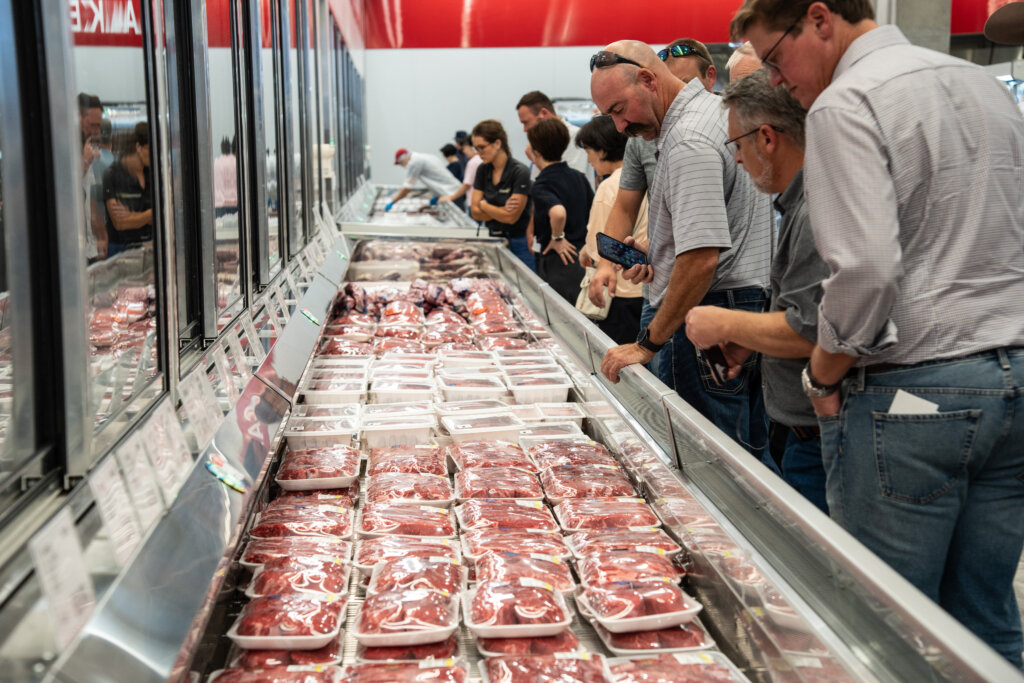
Costco in South Korea.
Another moment of pride came during their tours of retailers Costco and Emart. Lining the meat cases were stacks and stacks of USDA Choice and Prime beef. The Korean market recognizes the U.S. as the gold standard for safety, quality and consistency.
“What they are getting from the U.S. has such a rigorous inspection process that they trust in that relationship, because USDA has done such a great job making sure the product we’re eating is safe for consumers,” Kara explains. “That is a plus for the U.S. market going into Korea, because they have very strict regulations on what’s coming in.”
The Heartland Tour group also met with the U.S. Embassy in Seoul and learned about the behind-the-scenes work required to ensure markets are open and accessible to both countries.
“The in-country diplomatic staff is doing an incredible job of making sure that we have access to South Korea’s market,” Kara says.
“They trust in the USDA labeling and how critical it is that our beef meets those standards and best practices,” James adds. “They really do pay attention to that.”
Lasting value
Spending a week immersed in Korean culture, traveling with fellow U.S. agriculture producers and seeing firsthand the vast number of consumers seeking out U.S. protein is an experience both James and Kara say they will carry with them forever.
“It definitely is a sense of pride that you can create something in our small little county that can ultimately get to the other side of the world and feed a family,” Kara says. “Realizing what you are doing is being recognized, appreciated and nourishing folks — that’s just such a badge of honor.”
Access to international markets is also a key driver for future success. It promises that every pound is marketed to the best of its potential, especially variety meats or cuts that are not sought after domestically.
“We can get better numbers, more money per pound sending the cut to them than trying to consume it here in the U.S.,” James says.
“It’s a feeling of job security,” Kara echoes. “We can move that product and know they’re going to consistently want it, and so as we are raising good quality beef, there will be a place for it.”
—-
Ranch Life and Hospitality
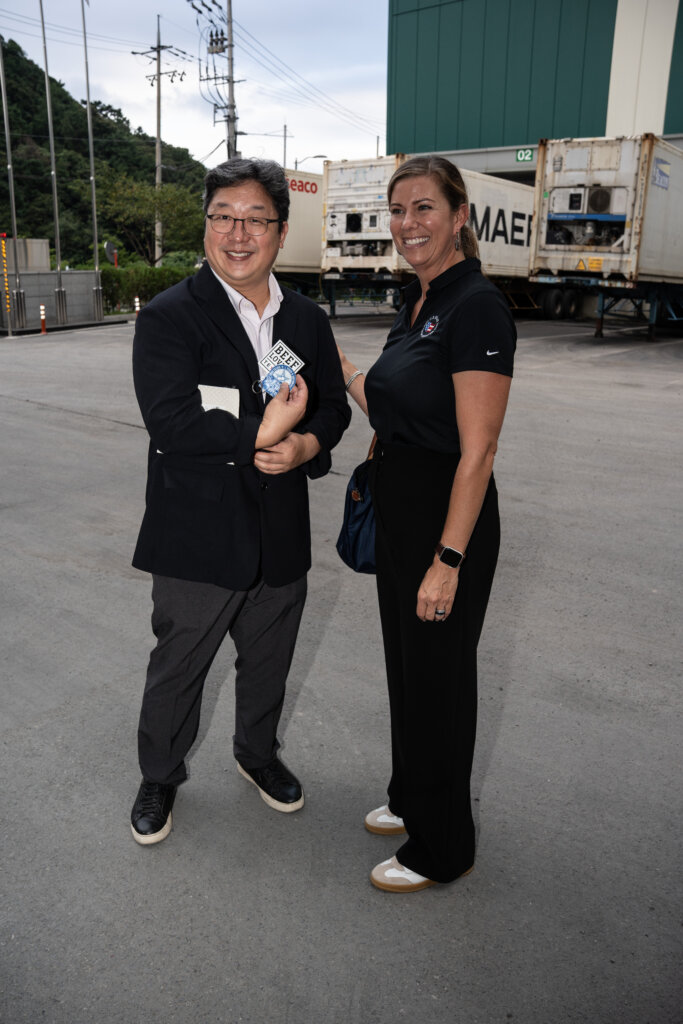
When South Korea’s top meat influencer, Yooxicman, arrived at the Yates Ranch near Cherokee, he was greeted with the kind of hospitality Texas ranchers are known for. For Kara and James Dudley, it was an opportunity to share their story of family tradition, dedication to their cattle and deep-rooted pride in raising quality beef.
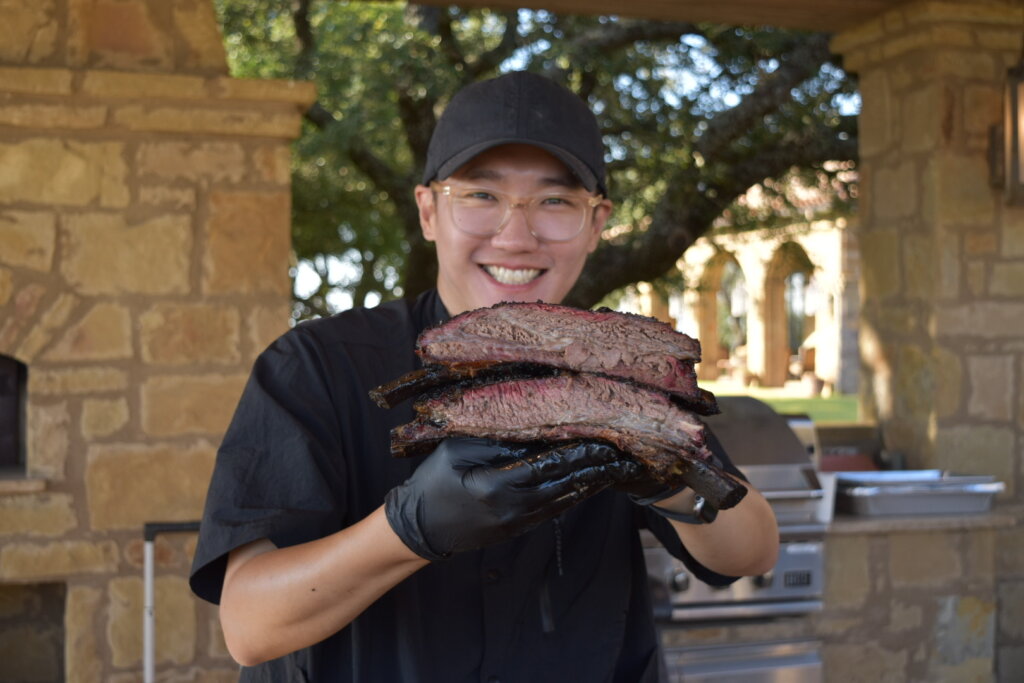
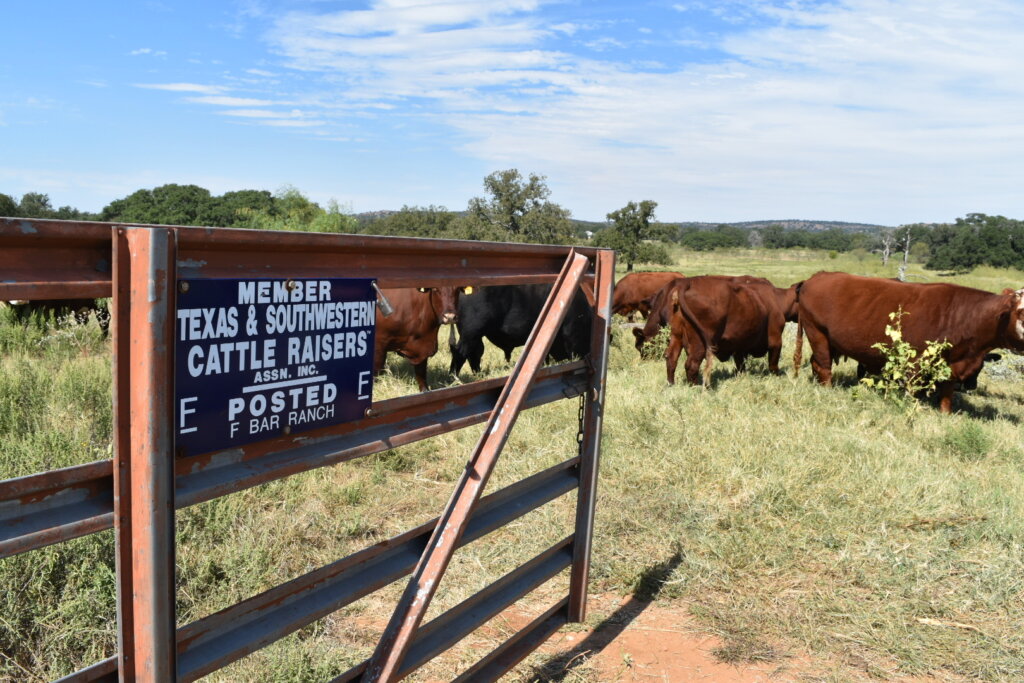
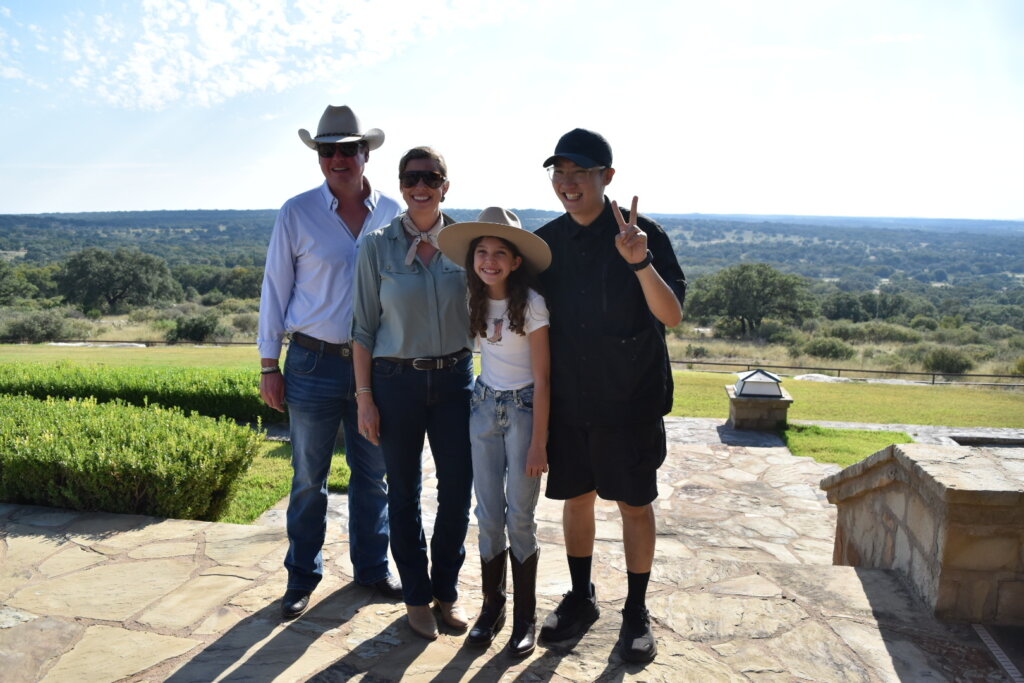
Yooxicman, pictured left, South Korea’s top meat influencer, traveled to Texas to visit the Dudleys, pictured center, at the Yates Ranch near Cherokee. He saw how the state is an ideal environment for cattle, with rolling pastures and plenty of space to thrive.
The visit, coordinated in partnership with the U.S. Meat Export Federation, a contractor to the Beef Checkoff, was designed to do more than showcase Texas ranching — it was a way to connect a global audience with the authenticity behind the beef they enjoy.
Food tourism and engaging online content play a significant role in consumer decisions, and influencers are powerful conduits for sharing authentic experiences. In Yooxicman’s case, that looks like sharing videos with his 1.3 million YouTube followers.
One of the highlights was a Smoking 101 demonstration led by Texas Beef Council’s Pit Master Jerry McPherson. Yooxicman learned about smoker usage, wood types and seasoning techniques. He even had the chance to start a fire and season brisket and short ribs, getting hands-on with the cornerstones of Texas barbecue. Texas Beef Council Meat Scientist Kaylee Greiner led a discussion on cuts and quality hallmarks of U.S. beef, reinforcing the care and expertise ranchers like the Dudleys bring to the table.
For the Dudleys, who have family ties to the land dating back to the 1920s, the visit was an opportunity to highlight the commitment that defines the beef industry. A tour of Yates and F Barra Ranches provided a stunning backdrop for filming and a look at the daily dedication to cattle and land stewardship.
“It was an honor to show them what makes Texas such a special place to be in the cattle business,” said Kara Dudley. “The family legacy is such a unique aspect of what we do here. It’s special to share with someone from another culture how it all starts on the ranch.”
James emphasized the importance of transparency with consumers, especially those in other countries. “Part of trusting a product is having education and background on where it came from,” he said. “It’s important to show how we do things the right way, and what the cattle mean to us and our livelihood.”
The day concluded at Yates Ranch for dinner, where a grilling demonstration showcased Prime cowboy ribeye steaks. This segment explored both gas and small charcoal grilling techniques, further emphasizing the versatility of U.S. beef.
For Yooxicman, the visit offered a chance to experience Texas firsthand, beyond the western movie stereotypes.
He also developed a deeper appreciation for Texas-style barbecue, noting the surprisingly simple seasoning and generous portion sizes that still deliver bold, rich flavor. While he said his favorite cut to prepare at home remains the sirloin, he left with a new perspective on the care and authenticity behind every beef meal.
At its core, the visit was a celebration of what makes beef a staple in Texas and around the world. For producers, it’s a powerful reminder that their daily commitment to quality, combined with strategic outreach, truly resonates far beyond their fences.
—-
Sidebar story and photos courtesy of Texas Beef Council.
###