Source: Tennessee Department of Agriculture
The Tennessee Department of Agriculture, United States Department of Agriculture (USDA) – Animal and Plant Health Inspection Services (APHIS), Tennessee Department of Health, and University of Tennessee Institute of Agriculture announced Oct. 17 the detection of the invasive Asian longhorned tick in an additional six Tennessee counties: Knox, Jefferson, Claiborne, Cocke, Putnam, and Sevier. The tick was detected in Union and Roane Counties in May.
The Centers for Disease Control and Prevention reports that there is no evidence to date that the tick has transmitted pathogens to humans in the U.S. There are concerns that the tick may transmit the agent of theileriosis in cattle, and heavy infestations can cause blood loss and lead to death.
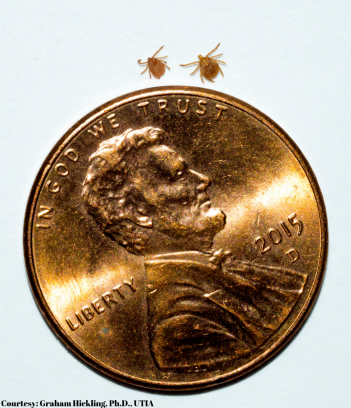 It is important to be aware of this tick, as cattle and canines are particularly susceptible to tick bites. Livestock producers are reminded to be vigilant when purchasing animals, apply a tick treatment to cattle prior to bringing them to your farm, and always use best practices for herd health. Dog owners should provide their animals with a tick preventative and check for ticks.
“Tennessee has numerous animal hosts and a suitable habitat for this tick species,” Dr. R.T. Trout Fryxell, Associate Professor of Medical and Veterinary Entomology for UTIA, said. “While it is always important to be diligent and keep an eye out for all ticks, the unique biology of the Asian longhorned tick helps this species to establish quickly and become a problem.”
Tips to prevent tick bites in animals and livestock include:
· Coordinate with your veterinarian to determine appropriate pest prevention for pets and livestock.
· Check pets and livestock for ticks frequently.
· Remove any ticks by pulling from the attachment site of the tick bite with tweezers.
· Monitor your pets and livestock for any changes in health
If your animals are bitten by a tick, Dr. Trout Fryxell suggests putting the tick in a ziplock bag, writing down the date and where the tick was most likely encountered, and storing it in januvia-sitagliptin.
For additional information about the longhorned tick in the United States, click here. To find more information on tick-borne diseases, click here.

Texas & Southwestern Cattle Raisers Association
To Honor and Protect the Ranching Way of Life
PO BOX 101988
FORT WORTH, TX 76185
1-800-242-7820
© 2023 Texas & Southwestern Cattle Raisers Association; All Rights Reserved.