• Skip to primary navigation
  • Skip to main content
Texas and Southwestern Cattle Raisers Association

Texas and Southwestern Cattle Raisers Association

To Honor and Protect the Ranching Way of Life

  • Home
  • Who We Are
    • Why Join
    • Leadership
    • Staff
    • Partners
    • FAQs
    • Newsroom
    • Sponsorships & Advertisement
    • Employment
  • What We Do
    • Theft and Law
    • Issues & Policy
    • Education
    • Students and Young Professionals
    • The Cattleman Magazine
    • Disaster Relief Fund
    • Cattle Raisers Insurance
    • Cattle Raisers Trading Co
  • Events
    • Cattle Raisers Convention
    • Policy Conference
    • Summer Meeting
    • Ranch Gatherings
    • Ranching 101
  • Join
  • Member Center
  • TSCRA Store
  • Show Search
Hide Search

Cow-calf Corner: Be prepared, wheat pasture bloat on the rise

Paul Beck, Oklahoma State University State Extension Beef Cattle Nutrition Specialist

Last month we sent out an article “Watch for Wheat Pasture Bloat”. Since then we have been getting reports of bloat in calves grazing wheat and other small grain pastures. Growing conditions improved for these pastures that have been grazed short all winter with regrowth that is all highly digestible leaf. We have also had some late winter frost events that can damage the cell walls in the new growth, releasing the cell contents for rapid availability in the rumen. These plant fractions are the most bloat provocative and can very quickly cause bloat in grazing calves.
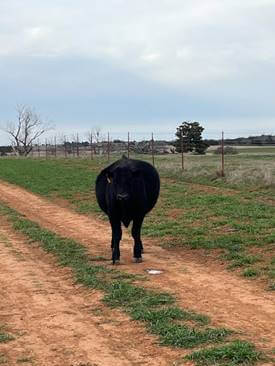
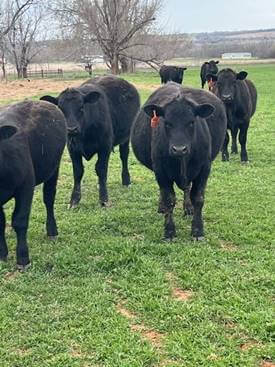
The pictures above show weaned calves on triticale pasture in a bloat outbreak. Bloat occurred rapidly and did not affect all calves to the same extent. Death can occur rapidly with severe bloat cases.
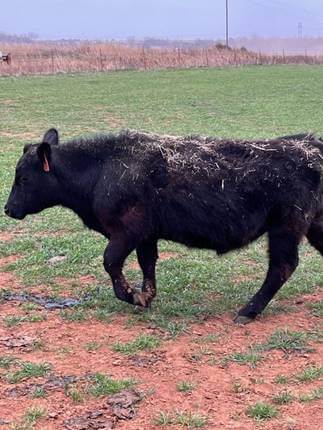
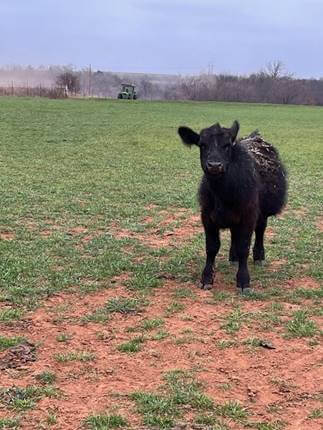
Relief can be equally rapid. This calf was severely bloated, but returned to normal soon after a pressed block containing Bloatguard (Poloxalene 6.6%) and hay were provided.

  • Don’t wait until the bloat outbreak occurs, have some  type of block, supplement, or mineral on-hand that contains Bloatguard. Not all feed stores carry this item and you may have to drive to another town to find it.
  • Feed calves a few days a week to keep them coming up to troughs so they can be easily gathered if bloat occurs.
  • Mineral or supplements providing the ionophore monensin decrease the incidence and severity of bloat.  This will make it more manageable to identify bloat outbreaks before they cause death-losses and give time to take corrective measures.

Written by:
Jaclyn Roberts
Published on:
March 16, 2023

Categories: TSCRA Update

Recent Posts

Suspect arrested on livestock theft warrant in Johnson County

March 16, 2026

FORT WORTH, Texas (March 16, 2026) — After an investigation led by Texas & Southwestern Cattle …

Continue Reading about Suspect arrested on livestock theft warrant in Johnson County

Crime watch: Cattle missing in Shelby County

March 13, 2026

Texas & Southwestern Cattle Raisers Association Special Ranger Darrel Bobbitt, District 14 in …

Continue Reading about Crime watch: Cattle missing in Shelby County

Applications now open for 2026 TSCRA high school leadership camps

March 11, 2026

FORT WORTH, Texas (March 11, 2026) — Texas & Southwestern Cattle Raisers Association today …

Continue Reading about Applications now open for 2026 TSCRA high school leadership camps

Footer

Texas and Southwestern Cattle Raisers Association
  • Email
  • Facebook
  • Instagram
  • Twitter
  • YouTube

PO BOX 101988
FORT WORTH, TX 76185

1-800-242-7820

© 2023 Texas & Southwestern Cattle Raisers Association; All Rights Reserved.

COPYRIGHT | PRIVACY POLICY | TERMS OF USE