
Source: Texas Animal Health Commission | July 19, 2019
Since the last vesicular stomatitis virus (VSV) update on Friday, July 12, 2019, the Texas Animal Health Commission (TAHC) has received reports of 11 new confirmed cases of VSV.
Texas VSV confirmations since July 12, 2019:
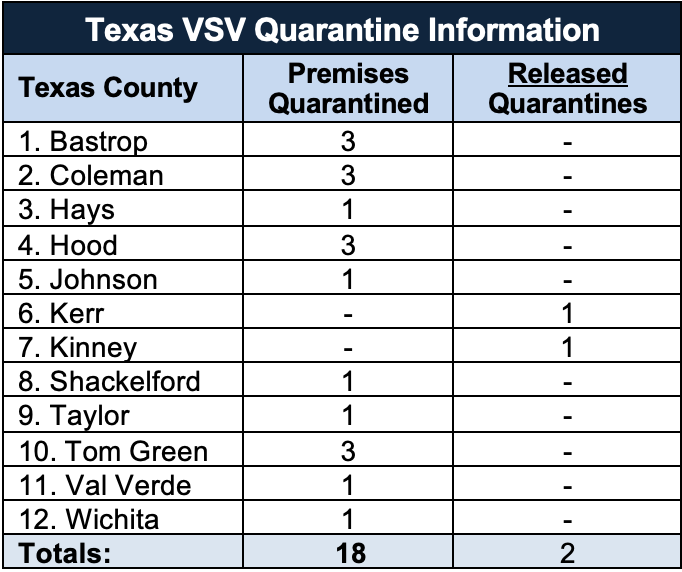
- 3 new VSV-infected equine premises in Bastrop County
- 1 new VSV-infected equine premises in Hays County
- 3 new VSV-infected equine premises in Hood County
- 1 new VSV-infected equine premises in Johnson County
- 1 new VSV-infected equine premises in Shackelford County
- 1 new VSV-infected equine premises in Tom Green County
- 1 new VSV-infected equine premises in Wichita County
The newly confirmed premises are under quarantine by the TAHC. Affected horses will be monitored by regulatory and authorized veterinarians until premises are eligible for quarantine release 14 days after clinical VSV signs are observed.
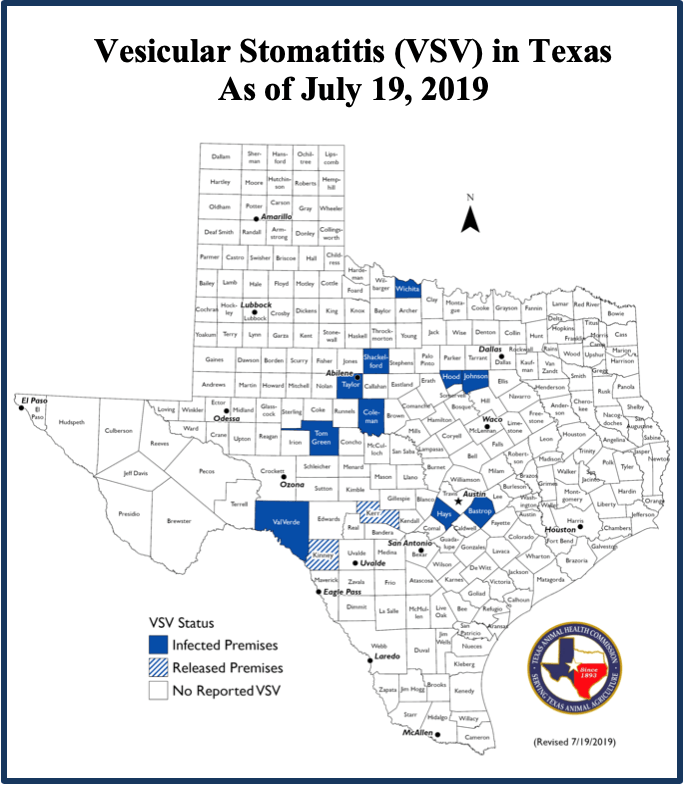
To date, 20 premises in 12 Texas counties have confirmed cases of VSV. Of the 20 premises, 2 have been released. Currently affected counties include: Bastrop, Coleman, Hays, Hood, Johnson, Shackelford, Taylor, Tom Green, Val Verde, and Wichita counties.
TAHC will send out VSV updates every Friday and all cases will be reported to the Equine Disease Communication Center. For VSV history and past updates click here. To view the USDA 2019 VSV situation reports click here.
What Veterinarians Need to Know:
- Several states are imposing enhanced entry requirements on Texas livestock due to the VSV cases. For information, contact the state of destination. For a list of state animal health offices click here.
- If you suspect your client’s horse has VSV, contact your TAHC Region Office for paperwork and procedures.
What Equine and Cattle Owners Need to Know:
- VSV is a viral disease that primarily affects horses and cattle.
- In the past decade, the Southwestern and Western United States have experienced a number of VSV outbreaks. Outbreaks usually occur during the warmer months, often along waterways.
- VSV normally has an incubation period of 2-8 days before the infected animal develops blisters that swell and burst, leaving painful sores. The virus can be transmitted through direct contact with infected animals or by blood-feeding insects.
- If VSV is confirmed, infected animals are quarantined for 14 days after clinical signs of lesions are observed. This short-term quarantine helps prevent the movement of animals and the spread of the disease to other premises, fairs or markets.
Strategies for Preventing VSV
Even with the best defensive measures, VSV could infect a herd. However, these tips may help protect livestock:
- Control biting flies
- Keep equine animals stalled or under a roof at night to reduce exposure to flies
- Keep stalls clean
- Feed and water stock from their individual buckets
- Do
n’t visit a ranch that’s under quarantine for VSV. Wait until the animals have healed
For more information about VSV visit https://www.tahc.texas.gov/news/brochures/TAHCBrochure_VS.pdf.
A USDA APHIS-VS fact sheet about Vesicular Stomatitis is available at http://www.aphis.usda.gov/publications/animal_health/content/printable_version/fs_vesicular_stomatitis_2012.pdf