
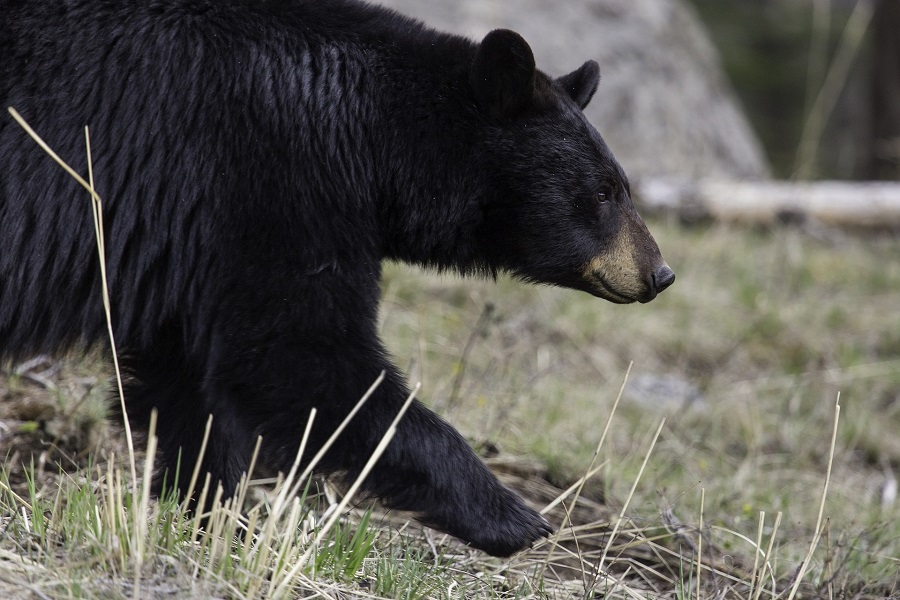
Source: Texas Parks and Wildlife Department | June 24, 2020
Once considered to be extinct in Texas, black bears have steadily recolonized the Big Bend region and other areas of West and Southwest Texas since the last decade of the twentieth century. The natural restoration of populations in west Texas has recently resulted in bears being spotted in more populated areas. Texas Parks and Wildlife Department biologists say the dry spring weather conditions have left bears on the move in search in food leading to an increase in sightings in the area.
“There has been a flurry of bear activity in the Trans-Pecos recently. Reports of black bears wandering into Fort Davis, Alpine and Fort Stockton were received this past week on Wednesday, Friday, and Saturday, respectively.” said Michael Janis, Trans-Pecos district leader.
Bears have an excellent sense of smell and much of their behavior is driven by their appetite. These natural characteristics can, however, become a problem when bears find an easy meal from a human-related source such as garbage, pet food or corn from a deer feeder. If over time a bear continually finds food around humans, it can become habituated, losing its fear of people and creating a potentially dangerous situation.
TPWD biologists say education is the best way to prevent human-bear conflicts.
“An ounce of prevention is worth a pound of cure when it comes to preventing conflicts with bears,” said Janis.
Residents in areas where bears have been spotted should secure anything that could be a potential attractant (e.g. garbage, pet food, bird and deer feeders, etc.). Residents can also choose to invest in bear proof garbage dumpsters, a recourse that many communities in the western U.S. have deployed to reduce or prevent bear encounters. Double-bagging garbage to reduce odors and keeping bags in a secure location until the morning of trash pickup are also encouraged practices. Similarly, TPWD biologists recommend feeding pets inside or limiting pet food portions to an amount that can be consumed completely at each feeding.
Particularly challenging to manage is the Texas culture of attracting and feeding deer. Bears are sensitive to electricity however, so electric fences can be used to prevent bears from accessing feeders while still allowing deer to reach them because of their ability to jump the fence. Although an added cost, electric fencing can pay for itself in the prevention of lost feed and damage to a feeder.
Black bears are currently a protected species in Texas. If you see a bear, please stay away and do not attempt to feed it. If you are in an urban or developed area, notify your local police or sheriff dispatch immediately and request that they contact the local Texas Parks and Wildlife Game Warden. Noting the bear’s size, direction, speed of travel and behavior, especially when it is feeding in town, will greatly aid authorities in determining how to respond.
“Bears and humans can co-exist well,” said Janis. “The key is preventing bears from accessing human-related food sources.”
TPWD is interested in documenting all sightings of bears and encourages reporting any sightings to a local biologist. Biologists can provide technical help on electric fence specifications and other ways to secure attractants. Residents can find a local biologist and more information about bear safety on the TPWD website.