
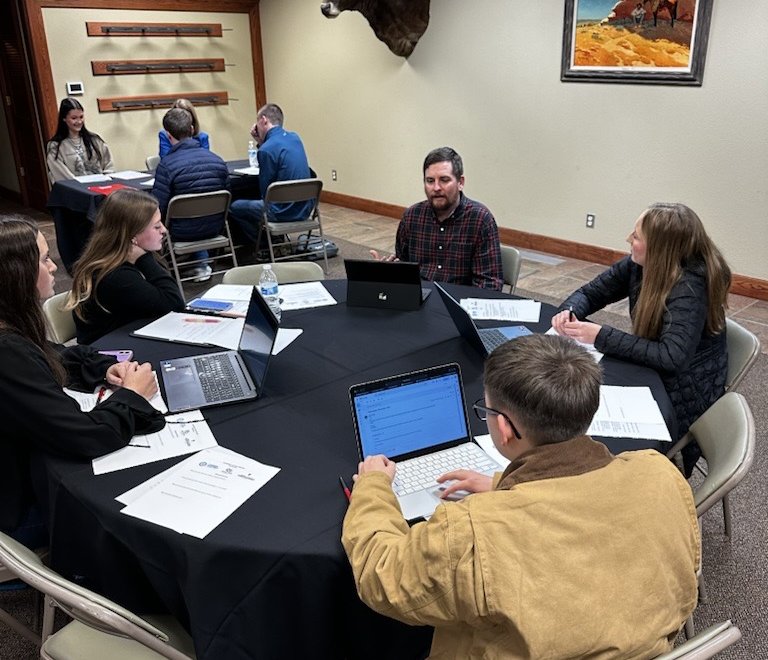
Texas & Southwestern Cattle Raisers Association Leadership Development Foundation hosts advocacy field day in Lubbock for high school students.
Photos courtesy of Addie Brown
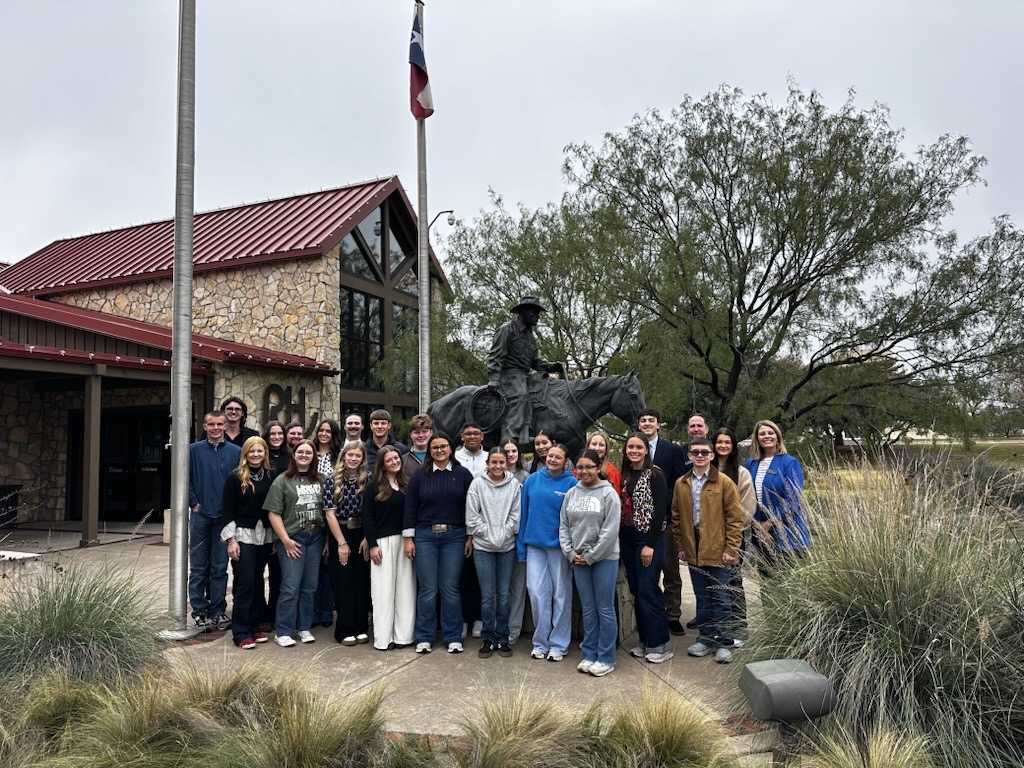
On Nov. 10, Texas and Southwestern Cattle Raisers Association and Texas Tech Davis College hosted the Agricultural Policy Advocacy Field Day at the National Ranching Heritage Center with 22 high school students in attendance.
The program is designed to engage students in the process of policy formation, implementation and the effect of state and federal law on production agriculture. Tasked with creating an advocacy plan on topics ranging from water rights and conservation to animal health and biosecurity, students learned from TSCRA staff and association partners before collaborating on their policy project.
During opening remarks, students heard from Jim Brett Campbell, Ranching Heritage Center Executive Director, and Dr. Clint Krehbiel, Dean of the Texas Tech Davis College of Agricultural Sciences and Natural Resources.
Peyton Schumann, Texas & Southwestern Cattle Raisers Association Executive Director of Government Relations and Lowell Randall, J.D., Executive Director of the Agricultural Policy Advocacy Program, Davis College of Agricultural Sciences and Natural Resources, guided participants through the importance of agricultural advocacy in politics, the role of agricultural lobbyists and the process of policy change in Texas and on Capitol Hill.
“The professionals here today are so well versed in their field, it makes learning from them fun and very informative,” said Korbin Lindsey, high school student from Wichita Falls.
Students also had the opportunity to learn from Cody Trimble, Texas & Southwestern Cattle Raisers Association Youth Coordinator about the resources available to them through the association through internship programs and a placement program. Dr. Erica Irlbeck, professor and Associate Dean for Outreach and Engagement, Texas Tech Department of Agricultural Education and Communications shared insights of the communication process of advocacy.
“We are the next generation of agriculturalist, so it’s important for us to learn the policy process. But in turn, one day we will also benefit from participating in these experiences and the policies formed by associations like TSCRA,” said Ella Dora, high school student from Iowa Park.
This event is one example of the impact of the TSCRA Leadership Development Foundation.
By working with industry partners to present students at both the high school and collegiate levels with opportunities to learn from the best in the industry, youth are gaining access future paths in agriculture.
Students in attendance represented a variety of backgrounds from involvement in their local FFA or 4-H program to production agriculture, making the reach of the day’s event valuable.
—-
###