• Skip to primary navigation
  • Skip to main content
Texas and Southwestern Cattle Raisers Association

Texas and Southwestern Cattle Raisers Association

To Honor and Protect the Ranching Way of Life

  • Home
  • Who We Are
    • Why Join
    • Leadership
    • Staff
    • Partners
    • FAQs
    • Newsroom
    • Sponsorships & Advertisement
    • Employment
  • What We Do
    • Theft and Law
    • Issues & Policy
    • Education
    • Students and Young Professionals
    • The Cattleman Magazine
    • Disaster Relief Fund
    • Cattle Raisers Insurance
    • Cattle Raisers Trading Co
  • Events
    • Cattle Raisers Convention
    • Policy Conference
    • Summer Meeting
    • Ranch Gatherings
    • Ranching 101
  • Join
  • Member Center
  • TSCRA Store
  • Show Search
Hide Search

ForageFax: Controlling bastard cabbage

Source: Texas A&M AgriLife Extension ForageFax | Nov. 1, 2019
Bastard cabbage (Rapistrum rugosum) is a cool-season annual, multi-branched, herbaceous plant native to Eurasia that grows from one to five feet or more in height. It has a robust taproot and dark green leaves that are lobed and wrinkled, but sometimes have a reddish cast. Bastard cabbage typically flowers from early spring into summer, bearing clusters of small, showy yellow flowers at the tips of its branches.
Bastard cabbage can be identified by its unusually shaped two-segmented seed capsule. The seed capsule is stalked, with a long beak at the tip, and contains 1-2 seeds. Bastard cabbage is also known as turnip-weed, common giant mustard, ball mustard, wild turnip, wild rape and tall mustard-weed.  It is designated a noxious-weed by both the federal government and Texas.
Bastard cabbage can form monocultures that reduce the emergence and abundance of more desirable warm-season grasses, cool-season wildflowers, or important forb species. Bastard-cabbage is commonly found in pastures, along roadsides, and on disturbed lands and is becoming invasive in natural areas such as open forests and along streams. Bastard cabbage is best controlled while in the rosette stage. It can still be controlled after the plant bolts, but it will require more herbicide.
Select Herbicide Options:
Weedmaster
2, 4-D
Chaparral
GrazonNext
Cimarron Max (for bermudagrass pastures, will damage bahiagrass)
REMEMBER: THE LABEL IS THE LAW! Always read the pesticide label before using.
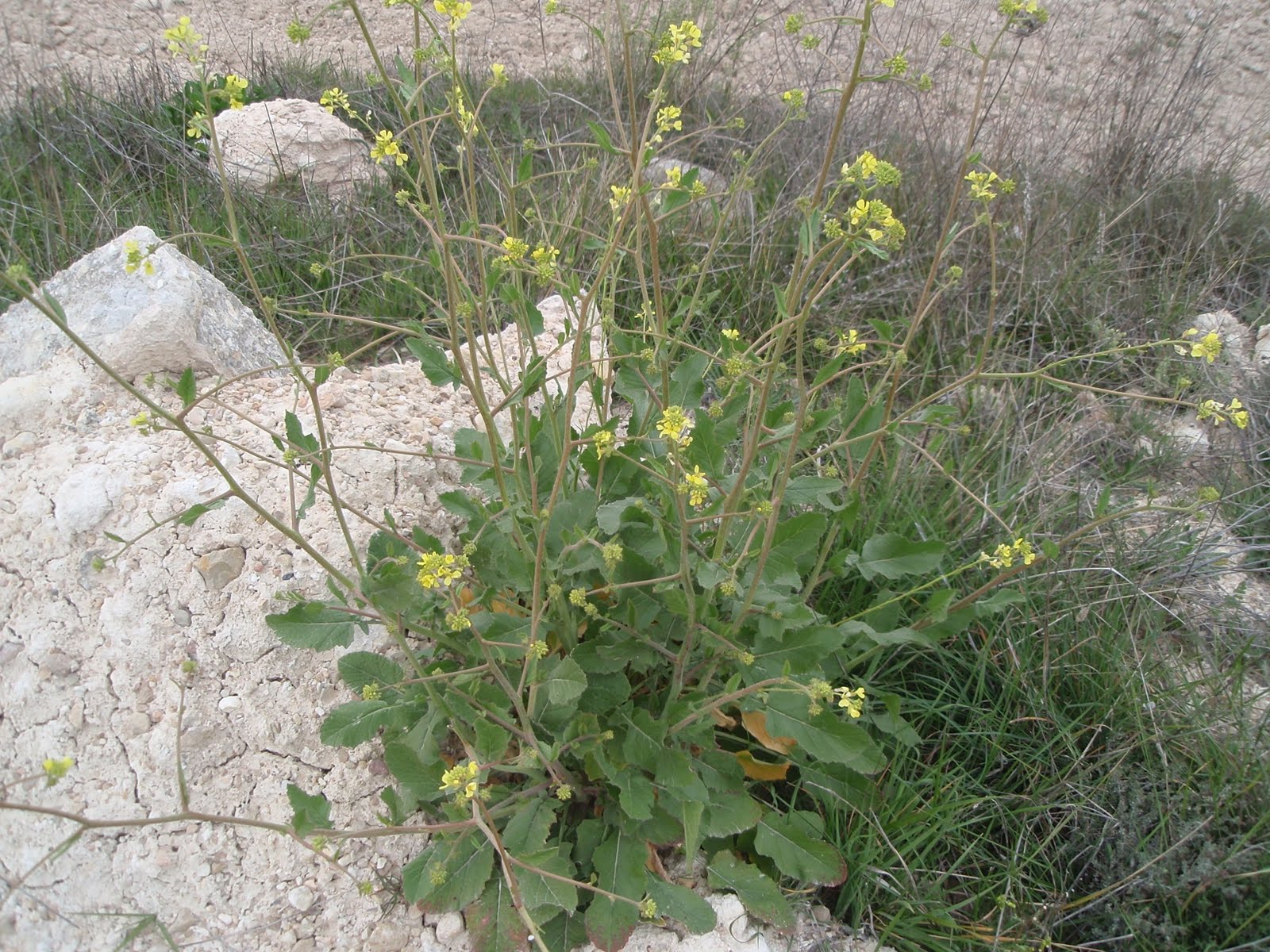
Bastard cabbage early
Pictures courtesy Texas A&M AgriLife Extension

Bastard cabbage roadside

Written by:
kristin
Published on:
November 4, 2019

Categories: Feed & Forage, Plants, Ranching

Recent Posts

Crime watch: Four Angus bulls missing in Clay County

December 12, 2025

Texas & Southwestern Cattle Raisers Association Special Ranger Chris Ward, District 1 in the …

Continue Reading about Crime watch: Four Angus bulls missing in Clay County

TSCRA submits joint amicus brief on private property rights court case

December 11, 2025

FORT WORTH, Texas (December 11, 2025) — Texas & Southwestern Cattle Raisers Association …

Continue Reading about TSCRA submits joint amicus brief on private property rights court case

Crime watch: Angus bull missing in Robertson County

December 9, 2025

Texas & Southwestern Cattle Raisers Association Special Ranger Chace Fryar, District 21 in East …

Continue Reading about Crime watch: Angus bull missing in Robertson County

Footer

Texas and Southwestern Cattle Raisers Association
  • Email
  • Facebook
  • Instagram
  • Twitter
  • YouTube

PO BOX 101988
FORT WORTH, TX 76185

1-800-242-7820

© 2023 Texas & Southwestern Cattle Raisers Association; All Rights Reserved.

COPYRIGHT | PRIVACY POLICY | TERMS OF USE